GEO traffic arbitrage has stopped being just a science of CPC and bids. Now it is a game of regulation, payment methods, and local holidays. If you are pouring traffic in Australia without knowing about the Melbourne Cup, or in Brazil without understanding what Carnival Season means for gambling you are burning money.
Tier 1: Expensive, Difficult, but Dense
When they talk about tier 1 gambling, they usually remember the States first. But 2026 brought shifts. Legalization continues state by state, but along with it come giant brands with offline budgets that buy up traffic at the root. For tier 1 gambling, only niches remain here: DFS (daily fantasy sports) in states where classic gambling is still banned, or crypto casinos for those looking for regulatory loopholes.
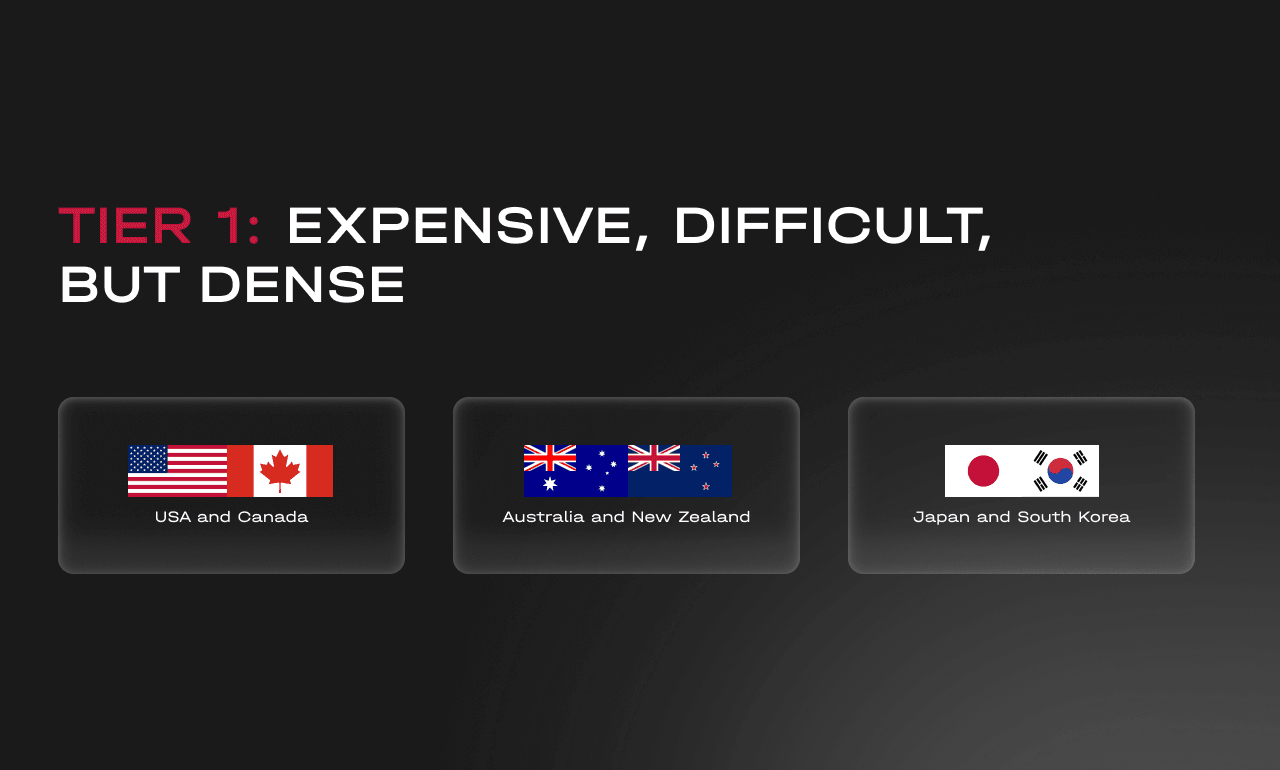
Canada remains a softer entry for those who want an English-speaking market without American competition. The peculiarity is provincial regulation. Ontario requires a local license for promo, but traffic from Quebec or British Columbia pours easier. Australia and New Zealand are markets with high checks but strict bans on creatives. Here, native approaches work: sports match reviews, not screaming banners with "200% bonus".
Japan and South Korea are closed clubs. To enter, you need not just translations but an understanding of the culture. In Japan, pachinko parallels are popular; in Korea, eSports betting. GEO traffic arbitrage in these regions requires native language speakers and payment methods like KakaoPay, which standard CPA networks don't take.
Tier 2: The Golden Mean and New Eldorados
If Tier 1 is a war of budgets, here you can still find windows. The Baltics (Latvia, Lithuania, Estonia) became interesting after local regulators started blocking unlicensed operators but kept legal "white" brands. For an affiliate, this means: you can pour traffic legally without fearing refunds in a week.
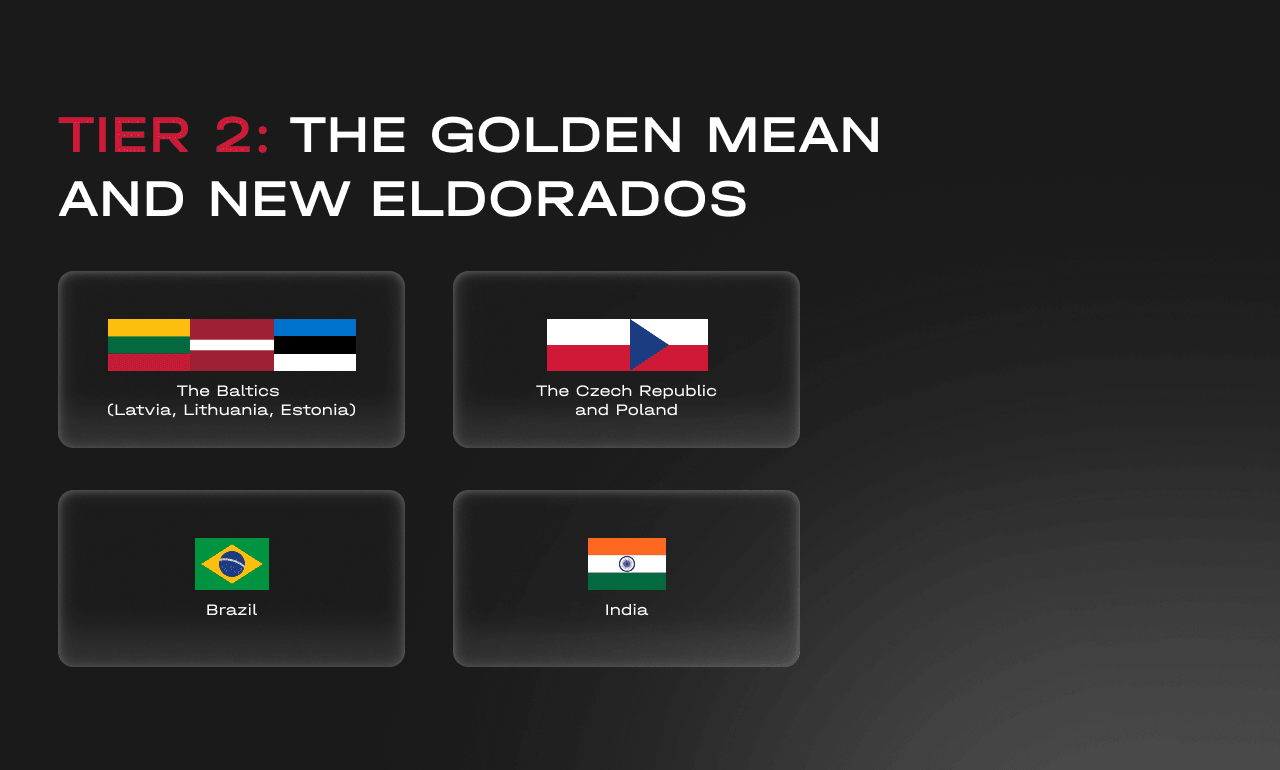
The Czech Republic and Poland are oversaturated but still solvent markets. In Poland, the keyword is "legalne kasyno online", and users search specifically for a license, not bonuses. In the Czech Republic, local payment methods work, similar to M-Pesa analogs, and people pay by mobile banking more willingly than by cards.
Brazil exploded in the market in 2025, and 2026 continues the trend. After regulating the betting market, legal operators appeared with huge advertising budgets, but casinos remain in a gray zone. This creates a paradox: traffic is cheap, conversion is high, but you need creatives for "jogos de azar" with careful presentation so as not to catch a ban from Meta.
India is a bull in a china shop. Traffic is cheap, there are many people, but the payment infrastructure is chaotic. UPI, Paytm, PhonePe and every state lives by its own rules. Tier 2 is conditional here: Mumbai and Delhi are almost Tier 1 by click price, but villages in Uttar Pradesh are pure Tier 3 by income.
What Tier 1 and Tier 2 Really Mean
Affiliates usually highlight three levels, but in gambling, the boundaries are blurred.
Tier 1 is not just the USA, Canada, and Australia. These are countries with high per capita income, strict regulation, and high barriers to entry. For GEO traffic arbitrage, this means: expensive traffic ($5-15 per click in the USA), high approvals ($200-500+), but also strict creative moderation. "Gray" approaches don't work here only white landings, honest reviews, native content integration.
Tier 2 gambling covers developing markets with solvent audiences but without oversaturation. Poland, Czech Republic, Brazil, Chile, South Africa, wealthy areas of India. CPC here is $0.5-2, conversion is stable, competition is moderate. These are the best GEOs for tier 2 gambling for those scaling turnover enough money for pouring, enough payment infrastructure for profit.
The choice between tier 1 gambling and tier 2 markets is not a matter of geography but of budget and speed. Tier 1 requires a reserve of $10-20 thousand for tests and nerves of steel to survive advertising account bans. Tier 2 allows entry with $2-3 thousand and grinding the mechanics without the risk of losing everything in one night. In 2026, successful affiliates hold a portfolio and strategy: 20% of the budget in Tier 1 for the long game, 80% in tier 2 gambling for fast turnover.
New Markets 2026: Where to Run Before It's Too Late
Africa. Not South Africa everything is occupied there but Nigeria, Kenya, Ghana. Mobile internet is cheaper than bread, payment methods like M-Pesa and Opay work stably, and competition is many times lower than in Europe. Local nuance: you need creatives in Swahili or Yoruba; English only works in cities.
Vietnam and Indonesia are forbidden zones from a regulation standpoint, but heavens for crypto casinos. Binance Pay and local wallets allow bypassing banking blocks. The main thing is not to use the word "casino" in creatives, replacing it with "gaming platforms" or "entertainment".
CIS affiliate programs excluding Russia and Belarus. Kazakhstan, Uzbekistan, Armenia, Georgia. These markets are experiencing a mobile gambling boom after Western brands left. Local operators pay good CPAs ($50-100), and traffic from TikTok and Telegram costs pennies.